

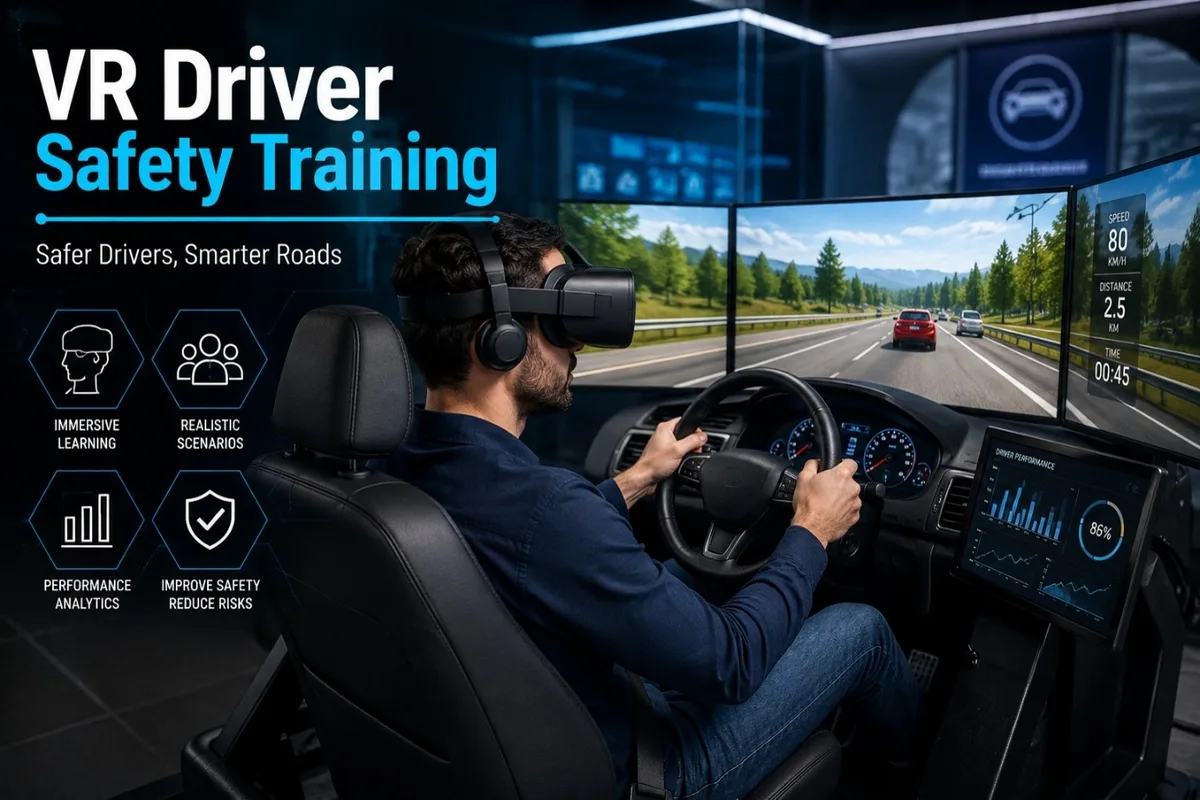
Market Summary
According to our Growth Market Report, the global VR Driver Safety Training market size reached USD 1.51 billion in 2025, underscoring its rapid adoption across various sectors. The market is expected to expand at a remarkable CAGR of 18.9% over the forecast period, projecting a value of USD 7.27 billion by 2034. This growth is propelled by the increasing emphasis on road safety, regulatory mandates for driver training, and the technological advancements in virtual reality driving simulation solutions. The market's momentum is further bolstered by the rising demand for effective, immersive, and cost-efficient training programs, especially in commercial and government sectors.
Introduction
The VR Driver Safety Training Market is emerging as one of the most impactful segments within digital learning and transportation technology. As road networks become more complex and vehicle technologies continue to evolve, traditional driver education methods are no longer sufficient to prepare drivers for unpredictable real-world conditions. Virtual Reality (VR) introduces a new dimension of experiential learning by placing trainees inside highly realistic driving environments without exposing them to actual road risks.
Across commercial transportation, logistics, emergency response, public transit, mining, construction, and corporate fleet management, organizations are increasingly recognizing that immersive learning can improve driver awareness, reduce accident rates, and strengthen compliance with safety standards. Instead of merely reading manuals or watching instructional videos, drivers now experience hazardous situations firsthand in a controlled virtual environment, enabling them to develop instinctive responses before encountering similar scenarios on real roads.
What Is the VR Driver Safety Training Market?
The VR Driver Safety Training Market encompasses software platforms, virtual reality headsets, driving simulators, AI-powered assessment tools, cloud-based analytics platforms, and professional services designed to improve driver skills using immersive technology.
These solutions recreate diverse driving environments such as:
- Urban traffic congestion
- High-speed highways
- Mountain roads
- Rural routes
- Extreme weather conditions
- Night driving
- Emergency braking scenarios
- Pedestrian crossings
- Vehicle failures
- Defensive driving situations
Unlike conventional simulators, modern VR systems deliver immersive 360-degree experiences where drivers actively interact with dynamic road conditions, making learning significantly more engaging and memorable.
Why Is VR Becoming Essential in Driver Safety Training?
Road accidents remain one of the leading causes of injuries worldwide. Human error continues to account for the majority of traffic incidents, including distracted driving, speeding, fatigue, and poor hazard perception.
Virtual Reality addresses these challenges by allowing drivers to repeatedly practice dangerous situations without any physical consequences.
Major advantages include:
- Risk-free learning environments
- Improved hazard recognition
- Faster skill development
- Enhanced muscle memory
- Better decision-making under pressure
- Increased learner engagement
- Reduced training costs over time
- Standardized instruction across multiple locations
Organizations also benefit from measurable performance analytics, enabling trainers to identify specific weaknesses and personalize coaching strategies.
Key Technologies Driving the VR Driver Safety Training Market
Advanced Virtual Reality Headsets
Modern lightweight VR headsets provide highly detailed graphics, wider fields of view, motion tracking, and realistic depth perception. These features create immersive driving environments that closely replicate actual road conditions.
Artificial Intelligence Performance Analytics
AI evaluates every driver action during simulation, including:
- Reaction time
- Steering accuracy
- Mirror usage
- Lane discipline
- Speed control
- Hazard anticipation
- Braking efficiency
Detailed reports allow instructors to monitor progress objectively rather than relying solely on manual observations.
Haptic Feedback Systems
Many advanced VR platforms integrate force-feedback steering wheels, vibration systems, pedals, and motion platforms that simulate:
- Road texture
- Tire grip
- Vehicle vibration
- Collision impact
- Weather effects
These physical sensations significantly improve realism and learning retention.
Cloud-Based Training Platforms
Cloud connectivity enables organizations operating across multiple regions to manage training centrally.
Benefits include:
- Remote monitoring
- Automatic software updates
- Driver performance dashboards
- Certification management
- Learning history
- Global standardization
Market Drivers Accelerating Global Adoption
Rising Road Safety Awareness
Governments and businesses are investing heavily in accident prevention initiatives. VR training supports proactive safety programs by allowing drivers to master complex scenarios before operating vehicles on public roads.
Increasing Commercial Fleet Operations
The rapid expansion of e-commerce, logistics, food delivery, and transportation services has dramatically increased the number of commercial drivers worldwide.
Fleet operators require scalable, standardized, and measurable training systems that VR technology can effectively provide.
Growing Insurance Industry Interest
Insurance providers increasingly recognize that advanced driver training may contribute to lower accident frequencies. Some organizations are exploring partnerships with VR training providers to reduce long-term risk exposure.
Advancements in Vehicle Technology
Electric vehicles, autonomous driving assistance systems, advanced driver-assistance systems (ADAS), and connected vehicles require drivers to understand new interfaces and safety protocols.
VR environments allow safe practice before drivers operate technologically advanced vehicles in real-world conditions.
Applications Across Industries
Commercial Truck Transportation
Long-distance truck drivers can practice:
- Highway merging
- Cargo stability management
- Fatigue scenarios
- Emergency braking
- Mountain driving
- Adverse weather conditions
This reduces operational risks while improving driver confidence.
Public Transportation
Bus operators train for:
- Passenger safety
- Urban congestion
- School zones
- Bicycle interactions
- Emergency evacuations
VR improves preparedness for complex city driving environments.
Emergency Services
Police, firefighters, and ambulance drivers require advanced decision-making skills under extreme pressure.
VR enables realistic emergency response simulations without disrupting public roads.
Mining and Construction
Heavy equipment operators can safely practice operating specialized vehicles within hazardous industrial environments before entering active worksites.
Emerging Trends Reshaping the VR Driver Safety Training Market
Personalized Learning Experiences
Artificial Intelligence is enabling adaptive learning pathways where training difficulty automatically adjusts according to individual performance.
Drivers receive customized scenarios targeting their weakest skills.
Multi-User Collaborative Simulations
Future platforms allow multiple trainees to interact within the same virtual traffic environment, improving teamwork among fleet drivers and emergency response personnel.
Mixed Reality Integration
Combining Virtual Reality with Augmented Reality creates hybrid learning environments where physical vehicle controls merge with virtual surroundings for even greater realism.
Real-Time Biometric Monitoring
Advanced systems now monitor:
- Heart rate
- Eye movement
- Stress levels
- Attention span
- Fatigue indicators
These insights help trainers understand how drivers respond psychologically during challenging situations.
Digital Twin Driving Environments
Organizations increasingly create digital replicas of actual delivery routes, industrial sites, ports, warehouses, or city roads.
Drivers familiarize themselves with specific operational environments before beginning real assignments.
Challenges Facing the Market
Despite strong growth potential, several challenges remain.
High Initial Investment
Premium VR hardware, motion simulators, and custom software development require substantial capital investment, particularly for small organizations.
Content Localization
Driving regulations differ between countries, requiring localized training modules that accurately reflect regional traffic laws and road conditions.
User Adaptation
Some first-time users experience motion discomfort during extended VR sessions. However, continuous improvements in hardware design are steadily reducing these concerns.
Technology Maintenance
Organizations must regularly update software, hardware, and simulation content to keep pace with evolving vehicle technologies and traffic regulations.
Opportunities for Future Innovation
The next generation of VR driver safety platforms is expected to integrate:
- Artificial Intelligence coaching assistants
- Autonomous vehicle training modules
- Connected vehicle simulations
- 5G-enabled remote instruction
- Predictive risk analysis
- Voice-controlled learning environments
- Gamification systems
- Blockchain-based certification records
These innovations will make driver education increasingly intelligent, scalable, and data-driven.
Source:- https://growthmarketreports.com/report/vr-driver-safety-training-market


