

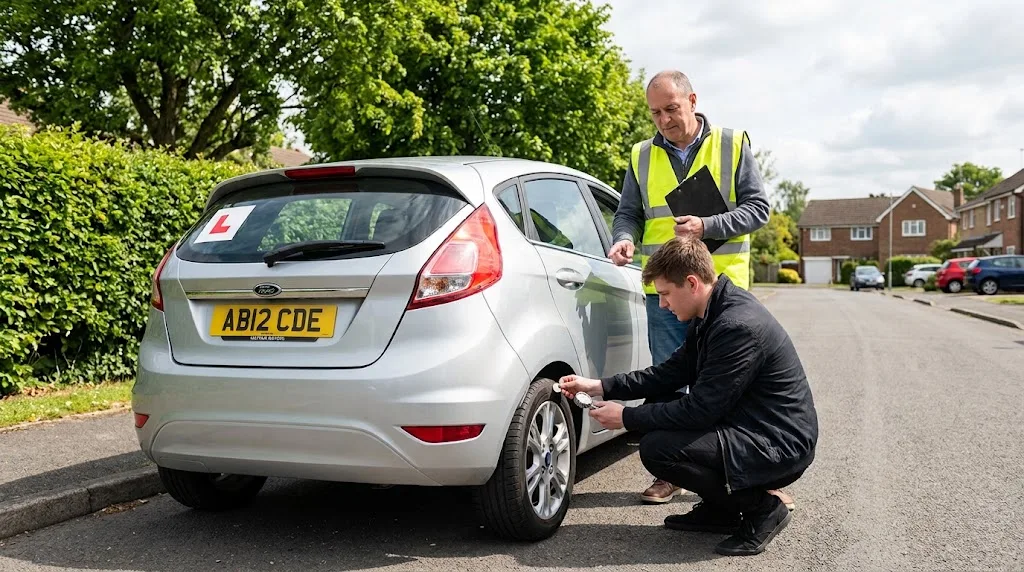
More than half of young UK drivers don't realise they're legally responsible for the condition of the tyres on any vehicle they drive - even when they do not own the vehicle. With TyreSafe's Young Driver Campaign returning on 1 September, an important message is being directed at learner and new drivers that two illegal tyres mean six penalty points and could potentially be the end of your driving freedom before it's properly begun.
With this in mind, Envoy Tyres, alongside its brand ambassador and car enthusiast Paul Cowland, is urging learner drivers to recognise the importance of tyre knowledge as they prepare for their test.
Paul Cowland comments: "With tyres being a key element of vehicle safety, understanding tyre condition isn't just good practice, but it could also feature in the driving test itself.
"Tyres keep you safe on the road, yet learner drivers often focus more on manoeuvres and road rules. Knowing how to check pressures, tread, and overall condition isn't just for the test, it's a lifelong habit that protects you, your passengers, and everyone else on the road."
Paul adds: "Tyres are fundamental to safe driving. During your test, there's a strong chance your tyre knowledge may be tested. This could be via a 'show me' or 'tell me' question during your test.
Paul has put together some top tyre hints and tips that learner drivers should be familiar with ahead of taking their test.
1. Tyre pressures:
- 'Tell me' questions may be asked and could include the learner being asked to locate information relating to the vehicle’s correct tyre pressures.
- Hint: check the sticker on the door, the sun visor, or the owner's manual.
- Always check pressures when tyres are cold, using a pump, pressure gauge, or garage airline. Don't forget the spare tyre too and remember to refit valve caps.
- This could also appear as a 'show me' question, so be ready to pull over and demonstrate the use of a gauge and adjust tyre pressure as needed.
2. Tread depth and tyre condition:
- Learners should know how to ensure tyres have sufficient tread depth and are in good general condition for the road.
- Minimum legal tread depth is 1.6mm across three-quarters of the width of the tyre, around its entire circumference.
- Check for cuts, bulges, or tears before every journey.
3. Pro tips for test day:
- For potential 'show me' questions on tread depth, turn the steering wheel fully to reveal the tyre edge.
- For an easy check, have a 20p coin on hand can help demonstrate tread depth - if the outer band of the coin is hidden, your tyres are above the legal limit.
Other top tips to help learner drivers feel prepared and calm:
- Ensure you arrive early on the day to avoid unnecessary stress.
- Have a lesson beforehand to put you in the right frame of mind, and this also means you can speak to your instructor about any last-minute concerns you may have.
- Eat something light to keep your energy steady.
- Take deep breaths before you begin - starting nerves are normal.
- Exaggerate your mirror checks - examiners are trained to look out for you checking your mirrors (and have an extra mirror to do this). Sometimes being a bit over the top in your mirror-checking won't do any harm.
- Remember - minor mistakes don't always mean failure, remain calm and continue the test as planned.
Paul concluded: "Understanding your tyres isn't just about passing a test, it's about keeping yourself, your passengers, and other road users safe. A little preparation goes a long way."


