
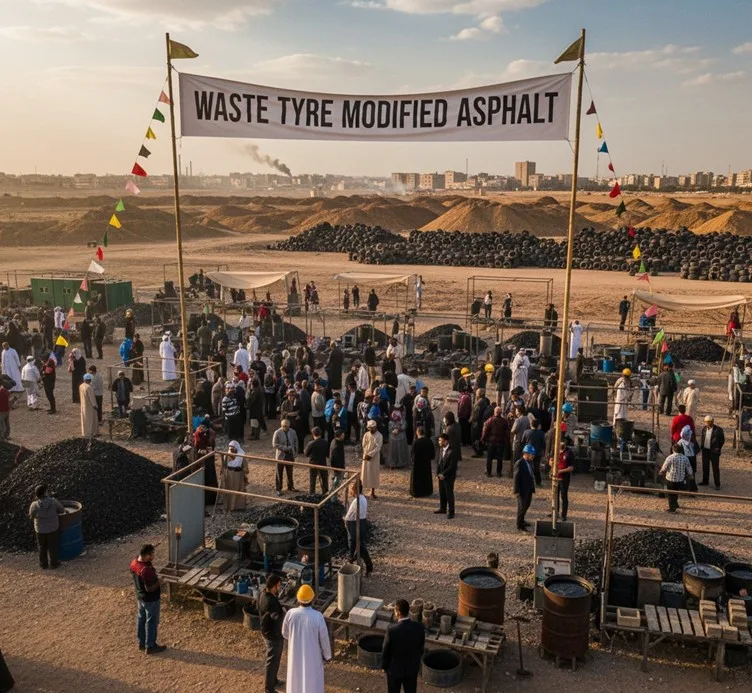
According to Research intelo , thewaste tyre modified asphalt market size reached USD 2.14 billion in 2024, reflecting the growing adoption of sustainable construction materials worldwide. The market is poised for robust expansion, exhibiting a CAGR of 6.8% between 2025 and 2033. By the end of 2033, the market is projected to attain a value of USD 4.13 billion, driven by increasing environmental regulations, heightened awareness of circular economy principles, and the urgent global need for effective waste tyre management solutions. The market’s growth is underpinned by the dual benefit of addressing tyre disposal challenges and enhancing asphalt performance, thus making it an attractive proposition for public infrastructure and private sector development alike.
As the world battles escalating waste and infrastructure challenges, an unexpected synergy is emerging. The Waste Tyre Modified Asphalt (WTMA) market is transforming discarded tyres once an environmental nightmare — into a high-performance road-building asset. This market exemplifies how sustainability and industrial innovation can work hand in hand, not in theory but in execution.
Understanding Waste Tyre Modified Asphalt
From Landfill Concern to Construction Resource
Every year, millions of tonnes of tyres reach the end of their lifecycle. Traditionally, they land in landfills and stockpiles, releasing toxins and posing major fire hazards. With WTMA, the rubber content from shredded tyres is blended with conventional asphalt binders, producing a more resilient and elastic paving material.
Why It Matters
Unlike standard asphalt, waste-tyre-modified asphalt enhances:
- Crack resistance
- Fatigue life
- Elasticity
- High-temperature performance
In other words, WTMA not only reduces environmental waste — it also builds longer-lasting and safer roads.
Market Drivers Fueling Growth
1. Surge in Sustainable Construction Commitments
Governments worldwide are under pressure to meet sustainability benchmarks. Integrating recycled rubber into asphalt is one of the most practical forms of circular economy execution in the construction sector.
2. Lower Maintenance Costs for Road Infrastructure
Roads built with WTMA last longer before degradation kicks in. For countries with heavy freight traffic or temperature extremes, this translates into massive savings in maintenance budgets.
3. Boost in Tyre Recycling Infrastructure
The rapid rise of tyre recycling facilities, rubber granulators, and pyrolysis plants enhances WTMA availability and lowers production costs. This is making the solution commercially attractive rather than merely eco-friendly.
4. Growing Demand in Rapidly Urbanizing Nations
Asia-Pacific, Middle East, Sub-Saharan Africa, and Latin America are witnessing aggressive road construction programs. As environmental regulations tighten, WTMA is quickly finding its place as a preferred paving technology.
Challenges the Market Must Overcome
Technical Standardization
WTMA formulations vary significantly depending on rubber size, mixing temperature, and asphalt grade. Global standard protocols are still evolving, which can delay large-scale adoption.
Initial Processing Costs
Although the lifecycle cost of WTMA roads is lower, the upfront cost of incorporation equipment and rubber processing can deter small contractors without government support.
Awareness Gap
Despite its benefits, WTMA adoption is slower in regions where stakeholders lack technical knowledge and case studies around its performance.
Technology Trends Shaping the WTMA Landscape
Crumb Rubber Modified Bitumen (CRMB): Finer rubber particles lead to improved homogeneity and outstanding elasticity.
Warm Mix Rubberised Asphalt: Reduces greenhouse emissions and energy consumption during mixing.
Nano-modified Tyre Rubber Additives: A rising innovation trend enhancing durability without increasing viscosity.
Automated Mixing Plants: Ensures consistency and reduces human errors in bitumen-rubber blending.
Competitive Landscape & Business Opportunities
- Liberty Tire Recycling
- Genan Holding A/S
- Tyre Collection Services
- Entech Inc.
- Rubber Asphalt Solutions
- Tyrecycle
- Green Distillation Technologies
- Lakin Tire
- Ecolomondo Corporation
- Murphy Paving
- CRM Rubber
- Lehigh Technologies
- Rubberized Asphalt Foundation
- Colas Group
- Dow Chemical Company
- Kraton Corporation
- BASF SE
- Shell Bitumen
- Sibur International
- China National Petroleum Corporation (CNPC)
Future Outlook: A Market Built on Innovation and Responsibility
According to Research intelo, over the next decade, the Waste Tyre Modified Asphalt Market is expected to become a central pillar of sustainable road construction. Its value proposition sits at a rare intersection
- reduced environmental burden
- enhanced infrastructure durability
- economic benefits for governments and industries
What once created waste and risk is now building strong highways, economic opportunities, and a greener tomorrow.
Source: https://researchintelo.com/report/waste-tyre-modified-asphalt-market