

Market Summary
According to latest research by Growth Market Reports, the global Solar Tire Health Monitor market size reached USD 1.44 billion in 2025, demonstrating significant momentum driven by the convergence of automotive safety innovation and sustainable energy solutions. The market is projected to grow at a robust CAGR of 13.6% from 2026 to 2034, reaching an estimated USD 4.54 billion by 2034. This expansion is primarily propelled by the increasing adoption of solar-powered automotive technologies, the growing emphasis on vehicle safety, and regulatory mandates for tire pressure monitoring systems (TPMS) across various regions. As per our latest research, the integration of renewable energy sources into automotive components is a key growth driver, fostering both environmental sustainability and operational efficiency.
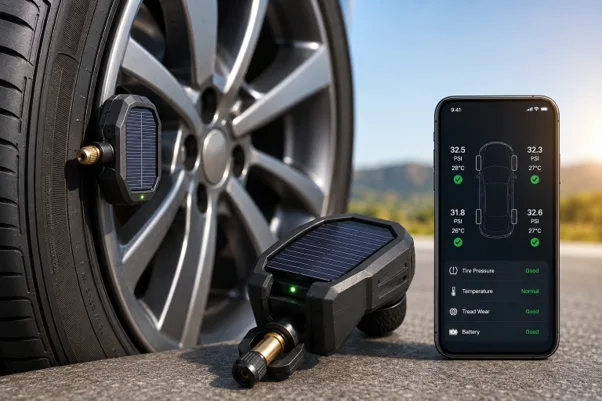
The Solar Tire Health Monitor Market is gaining momentum as vehicle owners, fleet operators, and automotive manufacturers increasingly prioritize tire safety, maintenance efficiency, and connected mobility. Solar-powered monitoring solutions combine tire pressure and temperature sensing with energy-efficient electronics, reducing reliance on conventional batteries while supporting continuous vehicle health monitoring.
Key Market Drivers
Rising Focus on Road Safety
Tire-related problems can affect vehicle handling, braking performance, fuel efficiency, and overall road safety. Increasing awareness of preventive maintenance is encouraging consumers and fleet managers to adopt technologies capable of identifying abnormal tire conditions before they become serious problems.
Expansion of Connected Vehicles
Connected vehicle ecosystems are accelerating demand for sensors capable of collecting and communicating real-time data. Solar tire health monitors can become part of broader vehicle monitoring platforms, enabling tire information to be integrated with mobile applications, dashboards, fleet management systems, and predictive maintenance tools.
Interest in Energy-Efficient Technologies
Automotive manufacturers are increasingly exploring low-power electronics and alternative energy sources. Solar-powered monitoring devices align with this trend by potentially extending operating life and reducing dependence on replaceable batteries.
Growth of Commercial and Fleet Applications
Fleet operators have a strong incentive to reduce unexpected maintenance, downtime, and operating expenses. Tire monitoring technology can help fleet managers identify underinflation, overheating, and other abnormalities across multiple vehicles, supporting more organized maintenance schedules.
Technology and Product Development
Innovation in sensor miniaturization, wireless connectivity, photovoltaic components, and data analytics is shaping the development of solar tire health monitors. Manufacturers are working toward compact designs that can withstand vibration, temperature fluctuations, moisture, road debris, and other harsh operating conditions.
Advanced models may combine multiple sensors with wireless communication technologies to deliver information to smartphones or centralized vehicle platforms. Integration with analytics and artificial intelligence could further improve the ability to identify unusual tire behavior and provide predictive maintenance recommendations.
Market Opportunities
The market offers significant opportunities for technology developers, automotive suppliers, fleet-management providers, and aftermarket equipment manufacturers. One promising area is the integration of tire monitoring with connected mobility platforms, where tire data can contribute to a more comprehensive understanding of vehicle health.
Electric and hybrid vehicles also present potential opportunities. Because these vehicles emphasize efficiency, lightweight components, and sophisticated electronic systems, energy-efficient tire monitoring solutions may complement their broader technology architecture.
The aftermarket segment could provide another growth avenue as vehicle owners seek convenient upgrades without replacing their existing vehicles. Easy installation, smartphone connectivity, reliable alerts, and low maintenance requirements could strengthen consumer adoption.
Challenges and Considerations
Despite its potential, the Solar Tire Health Monitor Market faces technical and commercial challenges. Solar energy availability can vary according to weather, vehicle usage, parking conditions, and geographic location. Manufacturers therefore need efficient energy-management systems to maintain reliable operation.
Sensor accuracy and durability are equally important. Tire-monitoring devices operate in environments exposed to heat, pressure changes, vibration, moisture, and mechanical stress. Ensuring consistent performance under these conditions can increase development complexity and manufacturing costs.
Data security and interoperability may also become increasingly important as tire monitoring systems connect with smartphones, vehicles, and cloud-based platforms. Standardized communication and strong cybersecurity measures can help build consumer and industry confidence.
Competitive Landscape
Continental AG
Sensata Technologies
Schrader Electronics (Sensata Technologies)
Denso Corporation
Huf Hülsbeck & Fürst GmbH & Co. KG
NIRA Dynamics AB
Pacific Industrial Co., Ltd.
Bridgestone Corporation
Michelin Group
Goodyear Tire & Rubber Company
Hankook Tire & Technology
Future Outlook
The Solar Tire Health Monitor Market is positioned for continued development as automotive technology moves toward greater connectivity, automation, and predictive maintenance. Future solutions are likely to become more intelligent, compact, energy-efficient, and closely integrated with vehicle software. As drivers and fleet operators increasingly seek proactive approaches to maintenance and safety, solar-powered tire monitoring could emerge as an important component of next-generation connected vehicle ecosystems.
Source: https://growthmarketreports.com/report/solar-tire-health-monitor-market


