
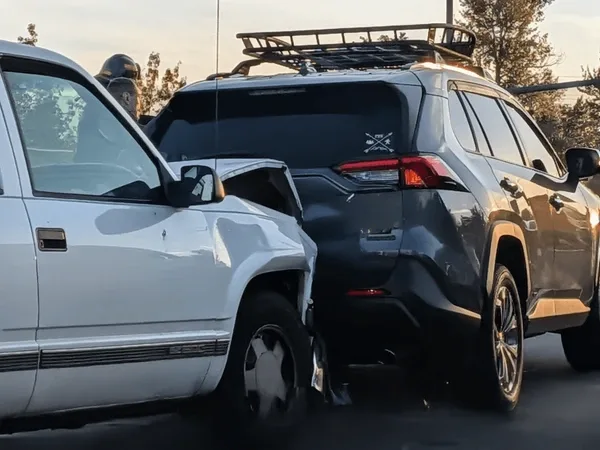
Chicago, popularly known as the Windy City, has a busy road network that includes major routes such as Lake Shore Drive, Kennedy Expressway, and Dan Ryan Expressway. These roads often experience heavy traffic, especially during rush hours. When vehicles slow down or stop suddenly, drivers may not have enough time to react, leading to rear-end collisions. In such accidents, people often assume that the driver who hits the vehicle from behind is always at fault.
But no, a rear-end collision does not always mean the driver in the back is at fault. Generally, the rear driver is presumed to be at fault because they have a legal duty to maintain a proper distance from the vehicle ahead and should be aware of the traffic conditions in front of them. However, this does not mean the front driver is always free from responsibility.
In some cases, the front driver's actions may also cause or contribute to the accident. The circumstances of the collision, the actions of both drivers, and the available evidence help determine who is responsible. A Chicago car accident attorney can help you understand how fault is decided and what steps you can take if you are injured in a rear-end collision.
When the Front Driver Can Be at Fault or Share Responsibility
Driving With Broken Brake Lights: If the front driver's brake lights are not working, the driver behind may not know when the front vehicle is slowing down or stopping. This can make it harder to react in time and may lead to a rear-end collision.
Cutting Off Another Vehicle: If the front driver suddenly moves into another vehicle's lane without leaving enough space, the driver behind may not have enough time to slow down or stop. The front driver may share responsibility for the collision.
Suddenly Slamming on the Brakes: If the front driver suddenly applies the brakes on purpose to scare or stop the driver behind them, they may be at fault if this causes an accident. This is known as brake-checking.
Causing a Chain-Reaction Collision: If a third vehicle hits the car from behind and pushes it into the vehicle in front, the third driver may be responsible for the collision. In this situation, the driver who was pushed forward may not be at fault.
Factors That Determine Who Is at Fault in a Rear-End Collision
Liability in a rear-end collision depends on several factors. The location of the accident, the laws followed in that state, and the available evidence all play an important role in deciding who is responsible.
1. The State Where the Accident Occurred
The laws used to determine fault can differ from one state to another. Therefore, the location where the accident occurred is important when deciding liability. For example, Chicago comes under Illinois state law, which follows a modified comparative negligence rule.
2. Whether Both Drivers Share Responsibility
Under Illinois' modified comparative negligence rule, an injured person can still recover compensation even if they share some responsibility for the accident, as long as their share of fault is not more than 50%.
Here is how it works:
Recovery is allowed: You can still recover compensation for your injuries or property damage if you are 50% or less responsible for the accident.
Proportional reduction: The total compensation you receive is reduced according to your percentage of fault. For example, if you are found 20% at fault in a $100,000 accident, your compensation will be reduced by 20%, and you can recover $80,000.
Bar to recovery: If you are found more than 50% responsible for the accident, you cannot recover compensation from another party.
This means that even if the driver in the back is partly responsible, the front driver may also share the blame depending on how the accident happened.
3. Evidence That Shows the Front Driver Was at Fault
To prove that the front driver was responsible for a rear-end collision, insurance companies and courts rely on different types of evidence. These include:
Dashcam footage: It can show whether the front driver suddenly reversed, applied brakes, or changed lanes without warning.
Eyewitness statements: People who witnessed the accident can explain what happened before the collision.
Police reports: These reports may contain details about the accident, statements from the drivers, and the officer's observations.
Vehicle damage: The damage to both vehicles can help determine how the collision happened and whether another vehicle pushed the rear car forward.
Having clear evidence can help establish how the accident occurred and determine whether the front driver was fully or partially responsible.