

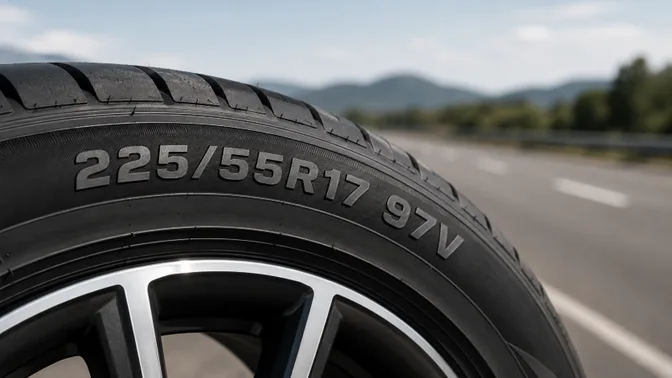
Tire speed ratings tell you the maximum speed a tire is designed to sustain under specified load and service conditions. The letter after the load index - such as T, H, V, W, or Y - is not decoration. It is a safety and performance marker that helps you choose a tire that matches your vehicle.
The point is simple: do not choose a replacement tire by size alone. The correct off road tires also need the right load index, speed rating, construction type, and fitment for how your vehicle is engineered to drive.
What Is a Tire Speed Rating?
A tire speed rating is a standardized letter code that shows the maximum speed capability of a tire when it carries the proper load and is used under specified conditions. It appears as part of the tire's service description, usually right after the load index.
For example, in a tire marking such as 205/55R16 91V, the number 91 is the load index and the letter V is the speed rating. In that example, V corresponds to a maximum speed capability of 240 km/h, or 149 mph.
That does not mean you should drive that fast. A speed rating is not permission to exceed legal speed limits. It is a technical capability rating that helps preserve the handling, braking, heat resistance, and overall performance characteristics intended by the vehicle manufacturer.
Where Do You Find the Speed Rating on a Tire?
Look at the tire sidewall and find the full tire size line. On most passenger-car tires, the speed rating is the final letter in the service description.
A typical sidewall code may look like this: 225/45R17 94W. The section width is 225 mm, the aspect ratio is 45, R means radial construction, 17 is the rim diameter, 94 is the load index, and W is the speed rating.
Giti's own tire-reading guidance explains key sidewall elements such as section width, aspect ratio, and rim size. The speed rating works alongside those markings; it should not be separated from the full fitment information printed on the tire.
Common Tire Speed Rating Letters
The most common passenger and light-truck speed ratings are listed below. Exact suitability still depends on the vehicle, tire size, load index, and manufacturer recommendations.
Why Speed Ratings Matter More Than Most Drivers Think
The weak assumption is that speed ratings only matter to people who drive fast. That is wrong. Speed ratings are tied to the tire's construction, heat control, handling response, and the way the tire behaves under load.
A tire with a lower speed rating may not deliver the same steering feel, braking stability, cornering response, or heat resistance as the tire originally specified for the vehicle. Even if you never drive near the rated speed, the rating can still affect everyday performance.
This matters because modern vehicles are engineered as systems. Suspension tuning, braking systems, stability control, wheel size, tire load index, and tire speed rating are meant to work together. Changing one part of that system without checking compatibility is a shortcut, not a smart saving.
Can You Use a Higher Speed Rating?
In many cases, replacing a tire with the same or a higher speed rating is acceptable, provided the tire also matches the correct size, load index, construction, and vehicle requirements. For example, moving from a T-rated tire to an H-rated tire may be technically acceptable if the full tire specification matches the vehicle.
But higher is not automatically better for every driver. A higher speed rating can sometimes come with a firmer ride, different tread design priorities, or a higher price. The better question is not 'What is the highest rating I can buy?' The better question is 'What rating did my vehicle require, and what driving conditions do I actually face?'
Can You Use a Lower Speed Rating?
This is where many buyers make a bad call. You should generally avoid replacing your tires with a lower speed rating than the vehicle manufacturer recommends. The lower-rated tire may look similar, fit the rim, and cost less, but it can reduce the vehicle's intended performance envelope.
There are limited exceptions in some markets for winter or specialty tires, but those exceptions should be handled through the vehicle owner's manual, local regulations, and professional tire advice. Do not guess. A cheaper tire that undercuts the required service description can create safety, insurance, and warranty complications.
What Speed Rating Should You Choose for a Giti Tire?
Choose a Giti tire speed rating that meets or exceeds the vehicle manufacturer's original specification. Start with the owner's manual, the tire placard on the driver's door jamb, and the markings on the current tires. Then confirm the exact Giti tire size, load index, and speed rating available for your vehicle.
Giti offers passenger car, SUV/4x4, light truck/van, and commercial tire categories in its product ecosystem. That range is useful, but it also means selection should be precise. A family sedan, compact crossover, work van, and performance car may all need different service descriptions even when the rim diameter looks similar.
The cleanest process is this: identify your vehicle's required tire size and service description, check the Giti tire options that match, then confirm with a trusted tire dealer before installation. Do not rely only on visual similarity or price.
Speed Rating vs. Load Index: Do Not Separate Them
The speed rating tells you how fast the tire is rated to operate. The load index tells you how much weight the tire can carry. They appear together because speed capability depends on the tire carrying the correct load under specified conditions.
A tire with the right speed rating but the wrong load index is still the wrong tire. Likewise, a tire with a strong load index but an under-specified speed rating may still compromise the vehicle's intended handling and heat performance.
When comparing Giti replacements, read the complete service description. For example, do not compare only 'V' against 'V.' Compare the entire size and service description: width, aspect ratio, construction, rim diameter, load index, and speed rating.
Simple Buying Checklist
- Check your owner's manual and tire placard before shopping.
- Match the full tire size, not just the rim diameter.
- Choose a speed rating that meets or exceeds the original equipment requirement.
- Confirm the load index together with the speed rating.
- Use Giti's tire finder or a qualified dealer to verify fitment.
- Avoid mixing tires with different speed ratings unless a professional confirms it is acceptable.
- Replace tires based on condition, age, tread depth, damage, and vehicle requirements - not price alone.
Common Mistakes to Avoid
The first mistake is buying the cheapest tire with the same size but a weaker service description. Tire size gets the tire onto the wheel; the service description helps confirm whether it is appropriate for the vehicle.
The second mistake is thinking a high speed rating means the tire is always better. A performance-focused rating may not be ideal if your priority is comfort, long tread life, or commercial load use. The right tire is the one that fits the vehicle and use case.
The third mistake is mixing ratings casually. If tires with different speed ratings are installed on the same vehicle, the lowest rating becomes the limiting factor. Mixed tire performance can also affect handling balance, especially during emergency braking or wet-road maneuvers.
FAQ: Tire Speed Ratings
What do tire speed rating letters mean?
Tire speed rating letters show the maximum speed capability of a tire under specified load and service conditions. For example, T is rated up to 190 km/h, H up to 210 km/h, V up to 240 km/h, W up to 270 km/h, and Y up to 300 km/h.
Is a higher tire speed rating always better?
No. A higher tire speed rating may support higher performance capability, but it is not automatically the best choice for every vehicle. It can affect ride feel, cost, and tread priorities. The correct rating is the one that meets the vehicle manufacturer’s required service description.
Can I replace H-rated tires with T-rated tires?
You should not replace H-rated tires with T-rated tires unless the vehicle manufacturer or a qualified tire professional confirms that the lower rating is acceptable. In most normal replacement situations, choose the same or a higher speed rating than the original equipment specification.
Where is the speed rating on my tire?
The speed rating is usually the final letter in the tire service description on the sidewall. In 225/45R17 94W, the W is the speed rating. It appears after the load index, which is the number immediately before the final letter.
Does tire speed rating affect daily driving?
Yes. Even if you never drive near the tire’s maximum speed, the rating can reflect construction, heat resistance, handling response, and stability. That is why replacing tires with the correct speed rating helps preserve the vehicle’s intended driving behavior, this also applies to run flat tires.
Should all four tires have the same speed rating?
Ideally, all four tires should match the vehicle’s required specification. If different ratings are fitted, the lowest-rated tire limits the vehicle’s safe top-speed capability and may affect handling balance. Always follow the owner’s manual and professional tire guidance.
Conclusion
Tire speed ratings are not random letters. They are part of the service description that helps determine whether a tire is suitable for your vehicle's speed capability, load demand, and intended handling behavior. For most drivers, the safest rule is simple: match or exceed the original equipment speed rating while also matching the correct size and load index.
Use the rating as a fitment checkpoint, not a marketing label. Check the owner's manual, read the tire sidewall carefully, compare the full service description, and confirm the final choice through Giti's tire tools or a qualified dealer before installation.


