
Michelin says it now sources only deforestation-free natural rubber, meeting the requirements of the upcoming European Union Deforestation Regulation (EUDR). The company is not limiting that standard to products bound for Europe. It is applying the same compliance to its natural rubber supply worldwide, which means the policy covers the rubber behind Michelin tires sold in North America as well.
The announcement, issued from the company's Clermont-Ferrand headquarters on November 26, 2026, describes the milestone as the result of several years of work to strengthen traceability and show that the rubber it buys does not come from deforested land.
A commitment that dates to 2015
Michelin first committed to deforestation-free natural rubber sourcing in 2015. Since then, under its natural rubber policy, the company has worked to make its supply chain more transparent and traceable. According to Michelin, that work has included:
Mapping risks and the plots where rubber originates
Bringing growers into its traceability system
Developing traceability systems
Using geolocation and satellite imagery
Supporting suppliers and growers
Michelin reports that about 1.5 million growers now take part in its traceability system and that nearly 2.5 million rubber-tree plots have been mapped. The company says these results show deforestation-free sourcing can work at scale.
Why natural rubber matters to tire makers
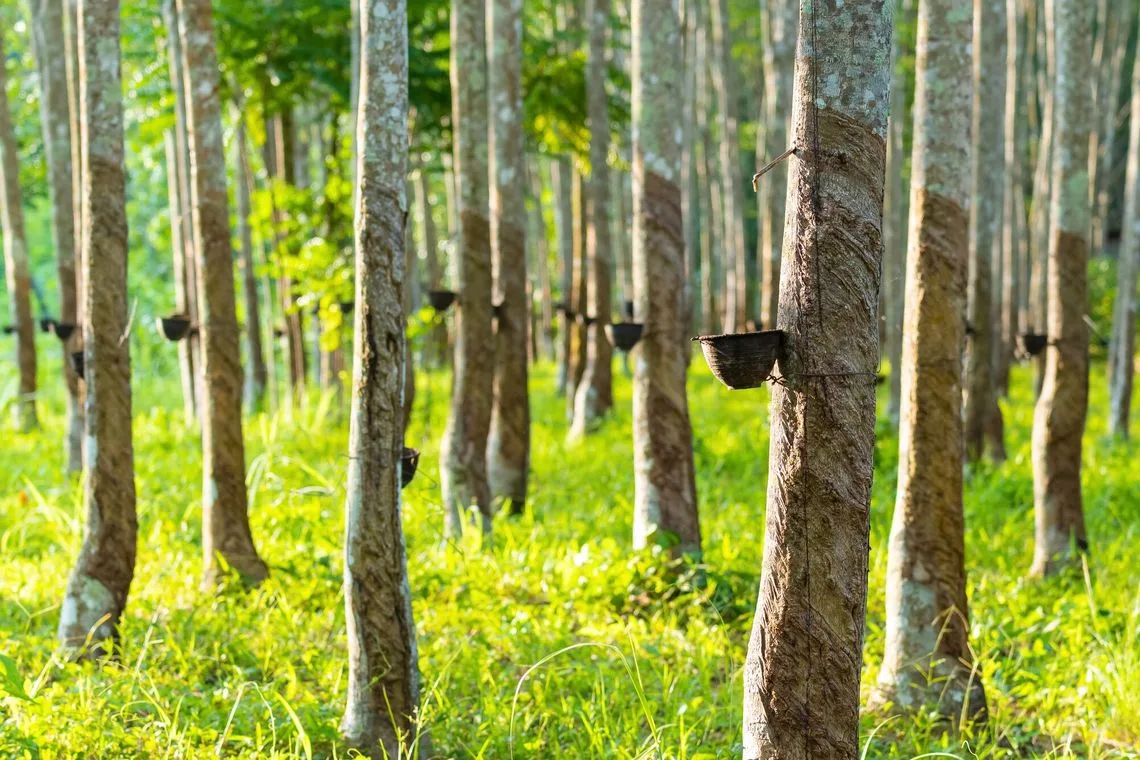
Natural rubber is a renewable, bio-based material, and tire manufacturing accounts for 75% of global natural rubber production. It is also used in medical equipment, industrial components and other mobility applications.
Michelin is one of the largest natural rubber buyers in the world, using nearly 750,000 metric tons a year. The company points to the material's strength, elasticity, flexibility and grip as essential to the performance, safety and durability of its products, and says no synthetic material can yet match its full range of properties.
Sourcing it responsibly is complicated. Rubber trees need the hot, humid conditions found mainly in tropical regions near the equator, and the global supply chain is highly fragmented. Michelin notes that it relies mainly on 6 million growers across several countries, with complex sourcing networks between them and manufacturers.
A call for a level playing field
Michelin describes the EUDR as a major step in the fight against deforestation but argues that lasting change depends on every link in the chain. It lists growers, cooperatives, traders, processors, manufacturers, distributors and public authorities as all having a role.
The company is calling for the same rules to be applied fairly to all market players, in Europe and globally. It says that consistency is needed both for the regulation to work and to protect the competitiveness of manufacturers that have invested in the transition.
"Michelin's experience over the past several years shows that responsible sourcing requires significant investment, robust technological tools and ongoing dialogue with stakeholders on the ground, NGOs and local authorities. Fairness and effective enforcement of the rules are essential to avoid putting companies that are committed to this transition at a competitive disadvantage. This momentum must be collective if we are to achieve a real and lasting impact in Europe and worldwide."
Pierre-Martin Huet, SVP Sustainability, Michelin
About Michelin
Headquartered in Clermont-Ferrand, France, Michelin is present in 175 countries and employs 122,600 people. More information is available at michelin.com.