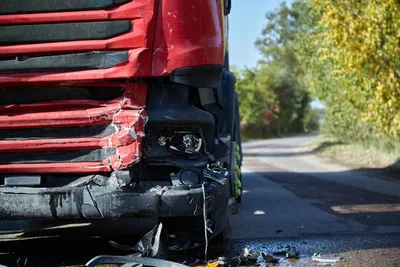


Excessive weight makes a truck harder to stop because its brakes must absorb more energy than they were built to handle. An overloaded truck usually needs more distance to stop, and its brakes are more likely to overheat and lose power.
Even at legal weights, a loaded tractor-trailer takes far longer to stop than a passenger car. Every extra ton of cargo adds to that gap and leaves less room for error in sudden traffic.
For anyone being hurt in an oversized load truck accident, understanding how weight affects braking can help explain why the truck could not stop in time. It also shows why weight records often become important evidence after a crash.
Keep reading for clear insights!
Why Weight Changes the Physics of Stopping
A moving truck carries energy, and the brakes must turn that energy into heat to bring the truck to a stop. The heavier the truck, the more energy the brakes must handle.
This energy rises in direct proportion to weight. A truck loaded to 88,000 pounds carries 10 percent more energy than the same truck at 80,000 pounds traveling at the same speed.
Speed makes the problem worse. Because energy increases with the square of speed, doubling a truck’s speed gives it four times the energy its brakes must absorb.
Total stopping distance has three parts: the time the driver takes to see a hazard, the time to react, and the distance the truck travels once the brakes engage. Extra weight mainly lengthens that last part.
Federal Limits Set the Safe Baseline
Weight limits exist partly because brakes, tires, and roads are designed around them. Exceeding those limits pushes equipment past what it was built to do.
Under 23 U.S.C. § 127, trucks on the Interstate System are generally limited to 80,000 pounds gross weight. Single axles are capped at 20,000 pounds and tandem axles at 34,000 pounds, with a bridge formula that spreads weight across axle groups.
Brake standards are tied to these rated weights. Federal Motor Vehicle Safety Standard No. 121, found at 49 C.F.R. § 571.121, tests many loaded truck tractors to stop from 60 mph within 250 feet. Those tests are done at the vehicle’s rated weight, not overloaded weights.
How Overloading Affects Braking
The added energy from excess weight shows up in several ways. Each one can lengthen stopping distance or make braking less predictable.
Brake Fade
Brakes lose stopping power as they get hotter. An overweight truck heats its brakes faster, especially during long downhill grades or repeated hard stops.
Uneven Axle Loads
Weight that is poorly balanced can overload certain axles while leaving others too light. Lightly loaded wheels may lock up and skid, while overloaded axles strain their brakes and tires.
Tire and Suspension Strain
Tires carrying more than their rated load can overheat or fail. A blowout during hard braking can cause the driver to lose control.
Conditions That Make It Worse
Overloading’s effect on stopping distance grows when combined with other risk factors:
Downhill grades that require long periods of braking
Wet, icy, or gravel-covered roads that reduce tire grip
Worn or poorly adjusted brakes
High speed or following too closely
Cargo that shifts forward during a sudden stop
What Weight Evidence Can Show After a Crash
When a truck fails to stop in time, investigators often check whether it was overloaded. Several records can help answer that question.
Bills of lading listing the cargo and its weight
Weigh station and scale tickets from the trip
Overweight permits, if the load required one
Electronic control module data showing speed and braking
Brake inspection and maintenance records
A permit for an oversized or overweight load does not remove the duty to drive safely. The carrier still must use equipment and speeds suited to the heavier load.
Takeaways
Heavier trucks carry more energy, so their brakes must work harder to stop.
Extra weight raises the risk of brake fade, especially on downhill grades.
Most Interstate trucks are limited to 80,000 pounds gross weight.
Federal brake standards are tested at a truck’s rated weight, not when overloaded.
Poor weight balance can cause wheel lockup and loss of control.
Scale tickets, cargo records, and truck data can prove overloading after a crash.